
Monitoring your dog through treatment
Your dog should be closely monitored in the early stages of therapy so that the dose of medication can be adjusted to meet their specific needs. This also helps to minimize the risk of side effects or complications that could be harmful to your dog.
At each monitoring checkup, your vet will make sure your dog is receiving the right dose to manage their symptoms and ensure they are not showing any signs of receiving too much medication. When your veterinarian is happy with your dog’s progress, your dog will need to visit your vet every three months for regular monitoring so that any dose adjustments can be made as required.
Here’s how your veterinarian will assess your dog’s response to medical treatment.
Looking for improvement in clinical signs
In most cases, you can expect to see a decrease in your dog’s appetite and the amount they drink within the first couple of weeks on treatment, as well as an improvement in their energy levels. Other symptoms may take 3 to 6 months to improve.
You can help your veterinarian to monitor your dog by recording their symptoms.
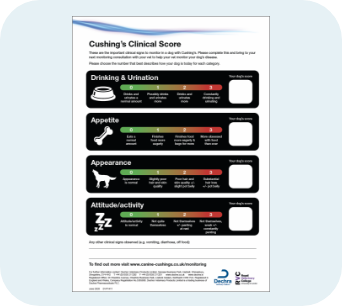
If your dog develops any signs of illness while on treatment, including lethargy, vomiting, diarrhea and loss of appetite, stop treatment immediately and contact your veterinarian as soon as possible.
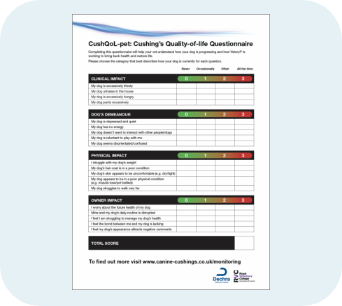
The CushQoL-pet questionnaire measures the quality of life of you and your dog, and can help to identify areas of potential improvement. It can show the improvement in quality of life over time with treatment, and it is recommended to complete the questionnaire every three months and to share the information with your vet:
Blood tests
While your dog’s symptoms are critically important in a monitoring consultation, blood tests are is also required to confirm the correct trilostane dose. Routine blood tests should be performed at 10-14 days, 1 month, 3 months and every 3 months after starting treatment.
Ensure you continue giving your dog the prescribed dose of medication even after you notice improvements in your dog’s symptoms. Medication will curb the excesses associated with the overproduction of cortisol but it will not cure your dog.
Monitoring is important and regular checks performed by your veterinarian will ensure your dog continues to get the best possible care.