
This site is provided as an information service for veterinary professionals and the owners of dogs who have been prescribed Vetoryl by their vet. Vetoryl is a prescription-only medicine, available only from your veterinarian. Any questions about your dog should be directed to your veterinary practice. Vetoryl is a registered trademark of Dechra Limited.

What is Vetoryl?
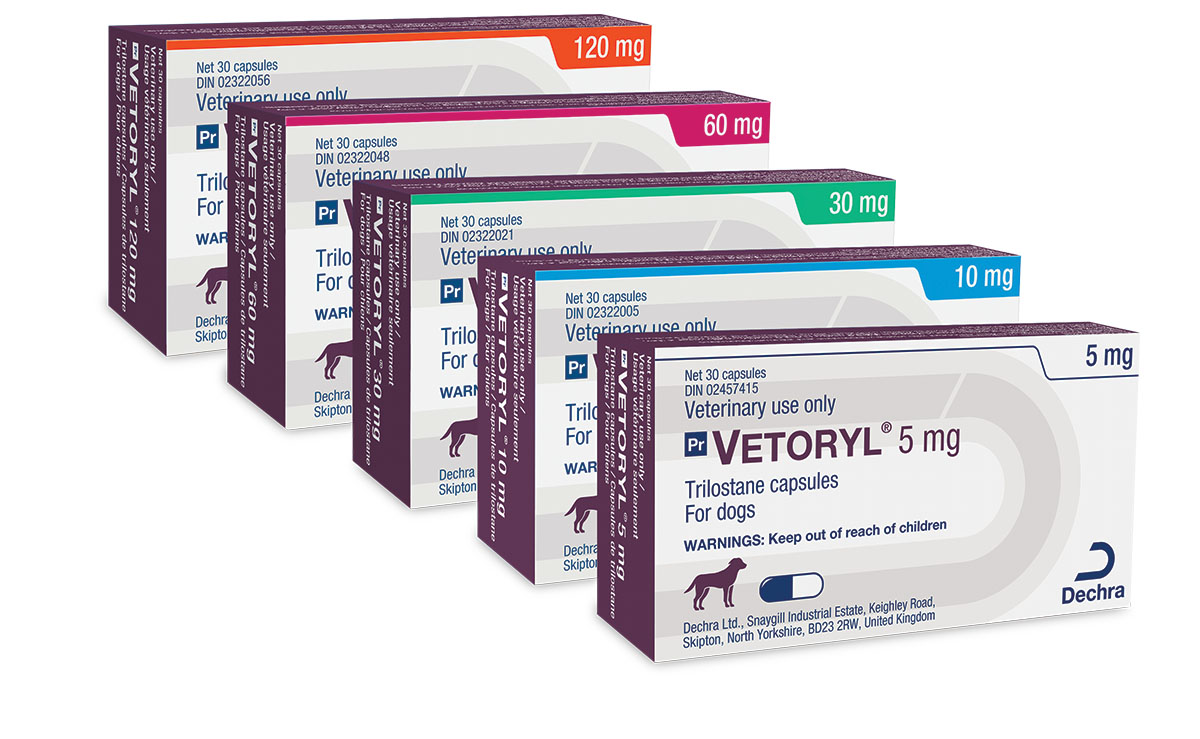
Vetoryl is the only veterinary-labelled treatment licensed treatment for use in dogs in Canada. It contains the active ingredient trilostane, a drug which reduces the production of cortisol by the adrenal glands.

Do’s and Don’ts of Administering Vetoryl
Do:
Don’t :
[Downloadable documents][Downloadable documents]
The active ingredient in Vetoryl is called trilostane. Trilostane is a short-acting medicine which needs to be given every day to control the clinical signs.
It is recommended that you give your dog Vetoryl with a meal so that it can be easily absorbed. However it may be that you disguise Vetoryl in treat before feeding to ensure ease of administration, or add to a small tastier meal before feeding a reduced portion of regular food. If you are struggling to administer Vetoryl please consult with your vet. DO NOT open Vetoryl capsules – they should always be given whole.
Vetoryl contains a drug called trilostane. Trilostane blocks an enzyme which is vital in the production of cortisol from the adrenal gland, which in turn lowers cortisol production. However, its effects are usually temporary, therefore you must continue to administer Vetoryl, even if your dog appears to be fully improved. Without a constant supply of Vetoryl, cortisol production will increase and your dog may start to display symptoms of Cushing’s once more.
For most dogs the effects of Vetoryl are seen quite quickly. It is usually the case that the signs of increased drinking and urinating improve quickly – within a couple of weeks on therapy. However, some changes will take longer to resolve, a potbellied appearance is a good example of this, and some may even worsen before they start to improve – such as hair loss. You can track your dog’s improvement by using the logbook . Please contact your veterinarian if you feel your dog is not improving as you would expect.
Contact your veterinarian. DO NOT give a double dose the next day.
Contact your veterinarian IMMEDIATELY. Vetoryl is rapidly absorbed from the gastrointestinal tract therefore it is vital that you gain professional advice as soon as possible. Your vet will advise you on the best course of action dependent on how much Vetoryl your dog has eaten and the time since the overdose occurred. It is useful to have this information ready for your vet. Key signs to look out for after an overdose include lethargy, anorexia, vomiting, diarrhea and collapse. You should present your dog for veterinary attention immediately should such signs occur.
Vetoryl is well tolerated by most dogs. If your dog develops any signs of illness whilst on Vetoryl including lethargy, vomiting, diarrhea and anorexia stop treatment immediately and contact your veterinarian as soon as possible.
Once on treatment, most patients will require Vetoryl for the rest of their lives. Therefore unless you are instructed to do so by your veterinarian, you should continue to give Vetoryl at the dose and frequency recommended by your vet. The exception to this rule would be if your dog develops any signs of illness whilst on Vetoryl including lethargy, vomiting, diarrhea and anorexia. In these cases stop treatment immediately and contact your veterinarian as soon as possible.
